
It was my third time to dive with Liquid Dumaguete in Dauin, Philippines. Most of the things are the same as before. The
updated one is the customers can access WiFi at the cottages. It's easier for
us to connect the "modern" world. For more information of the dive
resort and diving in Dauin, please check my previous posts:
Dive with Liquid DumagueteSecond MuckDiving Trip in Dauin

Moreover, we changed a place to take ferry going to Dumaguete this time. We were supposed to take fast craft at Li-loan port heading for Sibulan, Dumaguete as usual. Due to the bad sea condition, the ferry was cancelled. Instead, we went to Bato to take the ship of Maayo Shipping going to Tampi, Dumaguete. This big ship, which even can carry vehicles, isn't affected by the weather too much, however, this route takes about 40 minutes to reach Tampi and it's further going to Dauin.


I did 6 dives in two days. This post mainly share what I photographed during the dives:
1st / Dive Site: Sahara
Thorny Seahorse (Hippocampus histrix)

Ocellated
Tozeuma (Tozeuma lanceolatum)

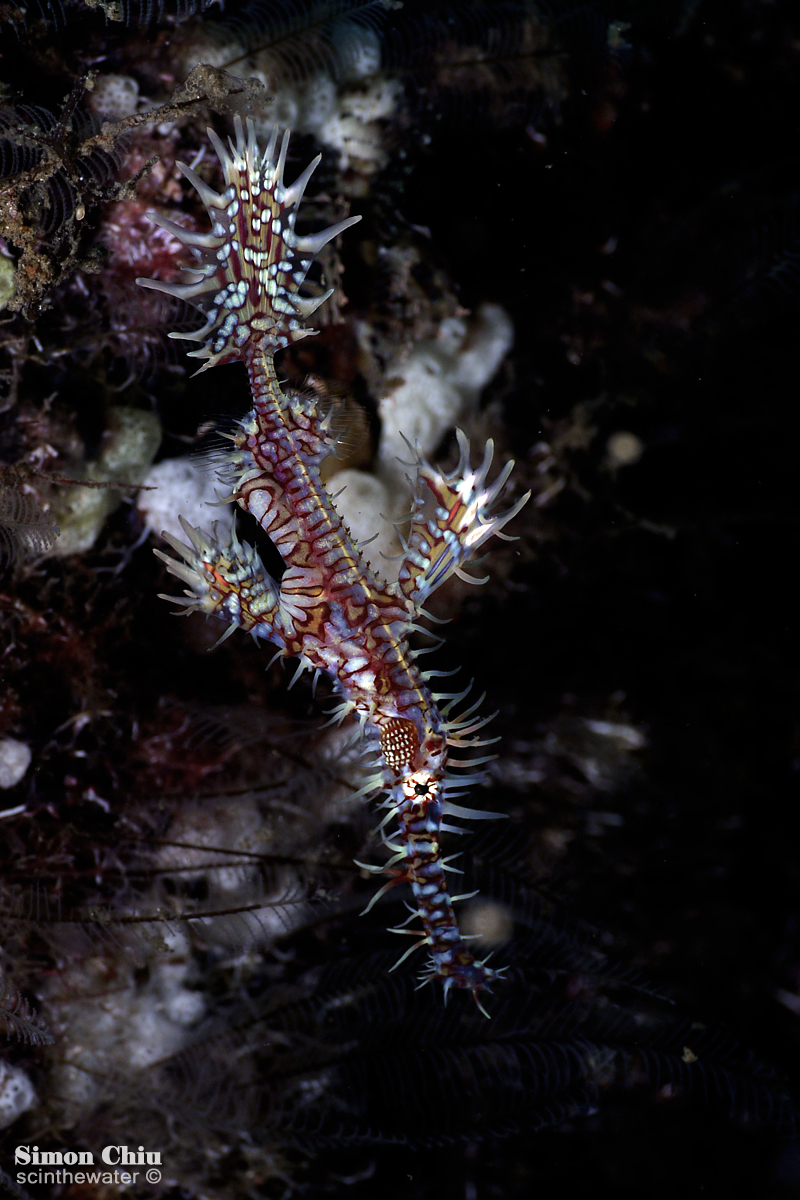
Ornate Ghost Pipefish (Solenostomus paradoxus)
Leaf
Scorpionfish (Taenianotus triacanthus)

Reptilian
Snake Eel (Brachysomophis henshawi)

Orangutan
Crab (Oncinopus sp.)

2nd
/ Dive Site: San Miguel (night dive)
Many-Lobed
Ceratosoma (Ceratosoma tenue)

Haig's
Porcelain Crab (Porcellanella haigae)

Tropical
Bottletail Squid (Sepiadarium kochi)

Coconut
Octopus (Amphioctopus marginatus)

Humpback
Prawn (Metapenaeopsis lamellata)

Mating
Tropical Bottletail Squid (Sepiadarium kochi)


Spiny
Devilfish (Inimicus didactylus)

3rd
/ Dive Site: Bymid
Giant
Frogfish (Antennarius commersoni)

Spotfin
Frogfish (Antennatus nummifer)

Painted
Frogfish (Antennarius pictus)

Orange-Banded
Pipefish (Dunckerocampus pessuliferus)

Flamboyant
Cuttlefish (Metasepia pfefferi)

4th
/ Dive Site: Bulak
Painted
Frogfish (Antennarius pictus)

Rabbit
Sapsucking Slug (Costasiella usagi)

Pacific
Thecacera (Thecacera pacifica)

Thorny
Seahorse (Hippocampus histrix)

Octopus

Nudi
(Eubranchus sp.2)

Ornate
Ghost Pipefish (Solenostomus paradoxus)

5th
/ Dive Site: Ginamaan
Kuro
Sapsucking Slug (Costasiella kuroshimae)


Anker's
Whip Coral Shrimp (Pontonides ankeri)

Leaf
Scorpionfish (Taenianotus triacanthus)

Painted
Frogfish (Antennarius pictus)

Great
Phyllodesmium (Phyllodesmium magnum)

Girdled
Glossodoris laying eggs (Glossodoris cincta)

Thorny
Seahorse (Hippocampus histrix)

6th
/ Dive Site: Cars (night dive)
Cowry
(Erosaria beckii)


Elegant Crinoid Squat Lobster (Allogalathea
elegans)

Spotted
Porcelain (Neopetrolisthes maculatus)

Spotted
Porcelain (Neopetrolisthes maculatus)

Painted
Frogfish (Antennarius Pictus)

Reptilian
Snake Eel (Brachysomophis henshawi)


